The Marshall House Incident: How Elmer Ellsworth Died Taking Down a Confederate Flag
Click to load the video from YouTube (privacy-enhanced mode). Or watch on YouTube ›
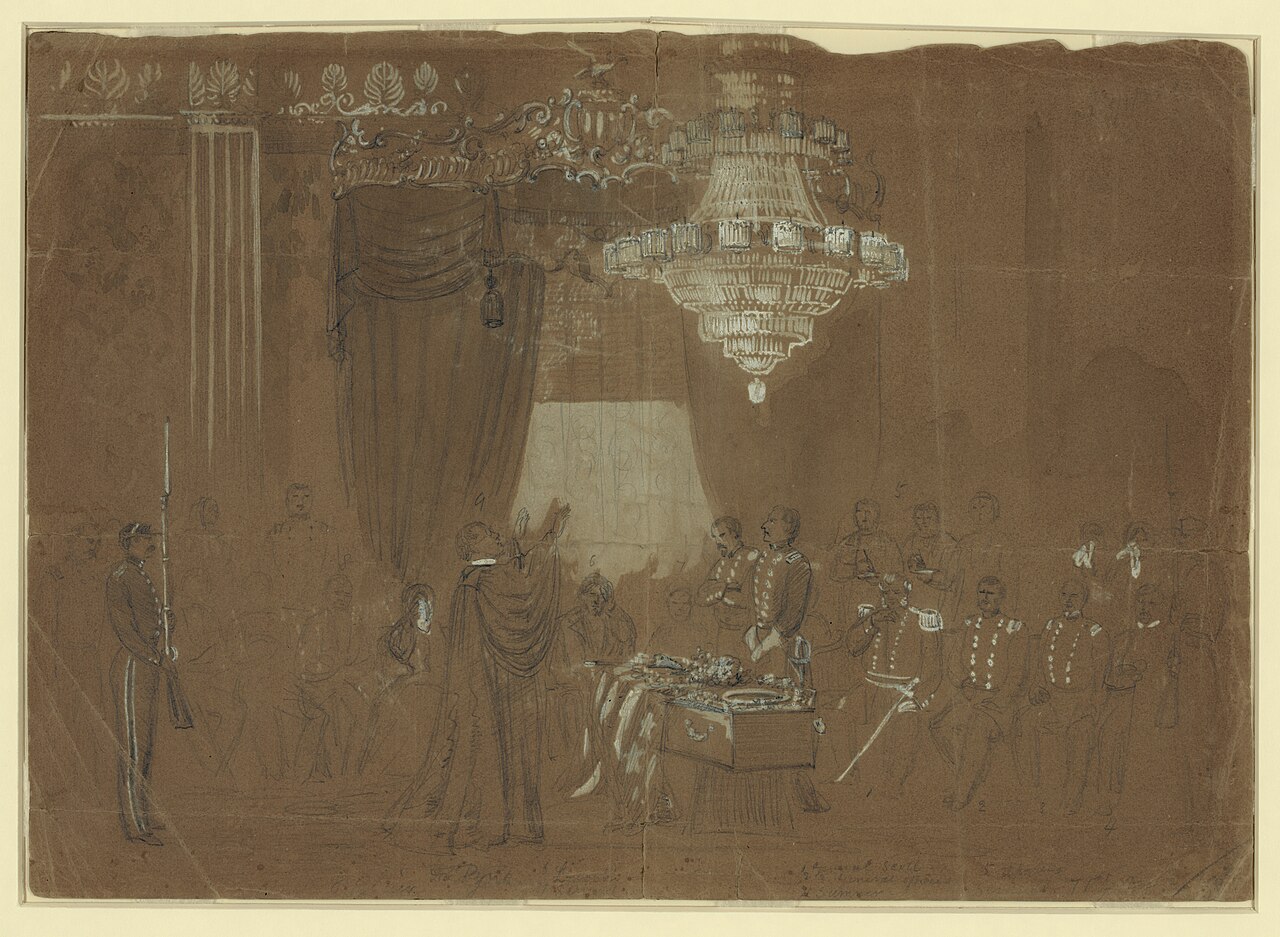
On the morning of May 24, 1861, two visitors found President Lincoln standing at a White House window. He turned and said, "Excuse me, but I cannot talk," and burst into tears. By the next day, the reason lay in a coffin in the East Room.
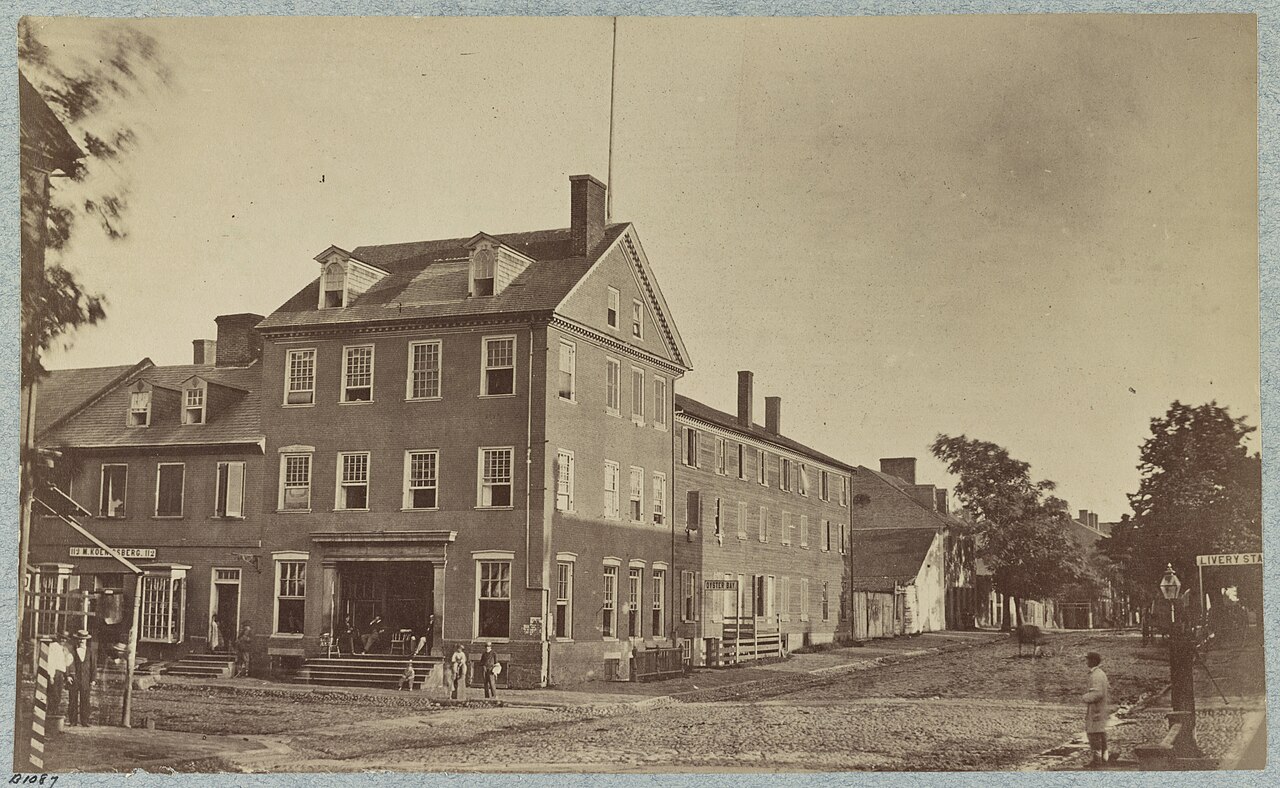
Colonel Elmer Ellsworth was twenty-four. He had studied law in Lincoln's Springfield office and ridden on his inaugural train, and Mary Lincoln's cousin called him "a great pet in the family." When war came, he raised a regiment of New York firemen, the Fire Zouaves. Across the Potomac, a large Confederate flag flew over an Alexandria inn, the Marshall House. For weeks, a reporter wrote, it had "swung insolently in full view of the President's House."
On May 23, Virginia voted for secession. That night, Union troops moved to seize the Virginia shore facing Washington: Arlington Heights and Alexandria. Ellsworth expected a fight and wrote his parents, "Whatever may happen, cherish the consolation that I was engaged in the performance of a sacred duty." The Fire Zouaves landed before dawn, unopposed. Ellsworth was heading for the telegraph office when he saw the flag, and decided the telegraph could wait.
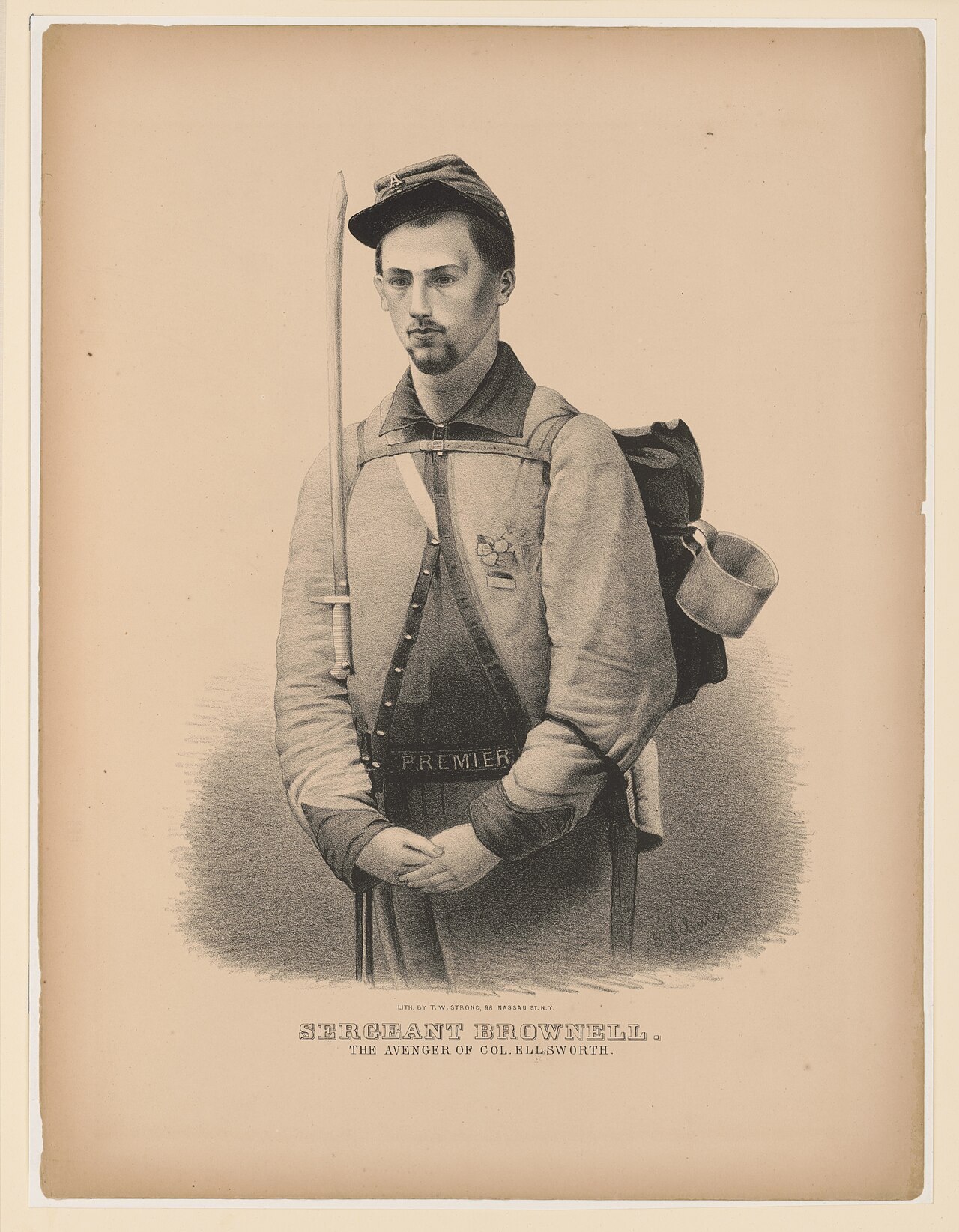
Just inside the door, a man in shirtsleeves said he knew nothing about any flag; he was only a boarder. Ellsworth went up with Private Francis Brownell, climbed to the roof and cut the flag down. Coming back down, at the first landing, a man stepped out of a dark passage and fired a shotgun into Ellsworth's chest, killing him. Brownell shot the man and ran him through with his bayonet. It was the innkeeper, James Jackson, and Ellsworth's secretary was sure he was the same "boarder" who had met them at the door. Ellsworth had been wearing a gold medal inscribed, in Latin, "Not for ourselves, but for our country"; the Atlantic Monthly wrote that the shot drove it into his heart.
Ellsworth lay in state in the East Room, and Lincoln wrote to his parents that "in size, in years, and in youthful appearance, a boy only, his power to command men, was surpassingly great." "Remember Ellsworth!" became a Northern rallying cry, and souvenir hunters cut scraps from the flag. In Richmond, a book hailed Jackson as "the first martyr in the cause of Southern independence." As for Brownell, the Medal of Honor did not yet exist that morning. Nearly sixteen years later he received one, for the "first Civil War deed to merit" it.
That same day, Union troops on Arlington Heights reached a mansion overlooking the capital. Its owner had left a month earlier. His name was Robert E. Lee.
Sources
- New York Tribune eyewitness account (Edward H. House), in Frank Moore, ed., The Rebellion Record, Vol. 1 (1861), pp. 279–280
- Lincoln to Ephraim D. and Phoebe Ellsworth, May 25, 1861, Collected Works of Abraham Lincoln IV:385–386 (manuscript: Huntington Library)
- New York Herald correspondent's report, May 24, 1861 (reprinted in the Richmond Daily Dispatch, May 30, 1861)
- "Ellsworth," The Atlantic Monthly, July 1861 (generally attributed to John Hay)
- Life of James W. Jackson, the Alexandria Hero (Richmond: West & Johnston, 1862)
- National Park Service: "Elmer Ellsworth"; Arlington House pages on the Lees and the Union occupation
- Owen Edwards, "The Death of Colonel Ellsworth," Smithsonian, April 2011
- Congressional Medal of Honor Society: Francis E. Brownell
- Lehrman Institute, Mr. Lincoln's White House: "Notable Visitors: Elmer Ellsworth"