The Baltimore Riot of 1861 (Pratt Street Riot): The Civil War's First Bloodshed
Click to load the video from YouTube (privacy-enhanced mode). Or watch on YouTube ›
On April 18, 1861, a Black man in a soldier's uniform walked into the Rotunda of the U.S. Capitol and took off his cap. Under it was a handkerchief soaked with blood. His name was Nick Biddle, orderly to a captain from Pottsville, Pennsylvania. As a Black man he could not legally enlist, but his company thought so much of him that he wore its uniform, and that is what enraged the Baltimore mob that hit him with a brick. He later sold his photograph captioned "the first man wounded in the Great American Rebellion." The next day, Baltimore exploded.
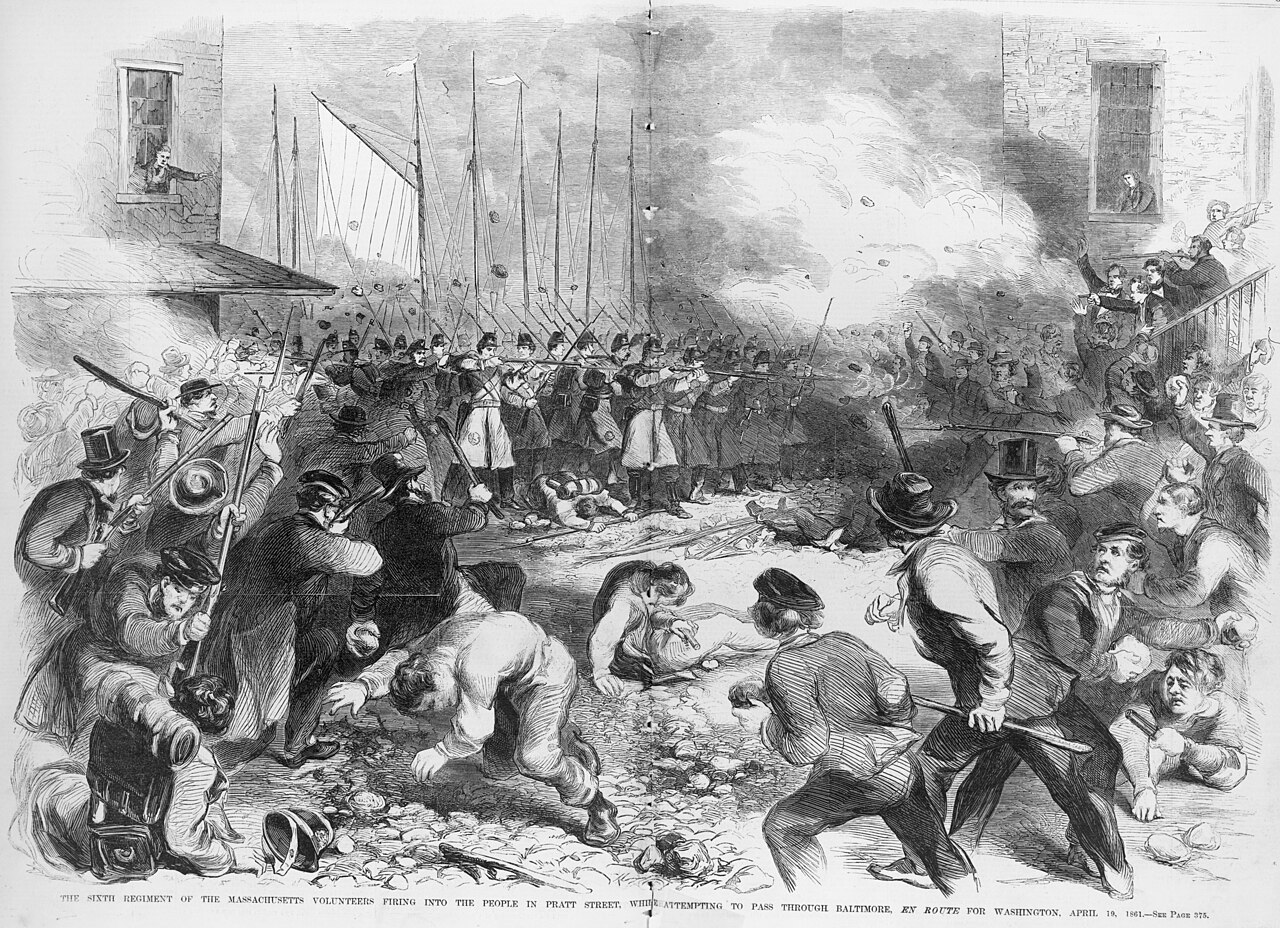
After Fort Sumter fell, Lincoln called for 75,000 militia. Every regiment from the North had to pass through Baltimore, a city in a slave state where many sympathized with the South, and there was no direct rail line through it. Trains from Philadelphia stopped at President Street Station; trains to Washington left from Camden Station. Because a city law kept steam engines off the downtown streets, horses pulled rail cars along Pratt Street between them.
On April 19, the anniversary of Lexington and Concord, the Sixth Massachusetts came through. Seven companies got across. Then the crowd piled anchors on the tracks, and the last four companies, about 220 men, had to climb out and march. Stones flew, then pistol shots; rioters wrenched muskets from soldiers' hands, and the troops fired back on the run, some blindly over their shoulders. Mayor George William Brown ran to the head of the column, waving his umbrella and crying, "For God's sake, don't shoot!" Police marshal George Kane finally threw a line of officers between the troops and the mob, revolvers drawn. Even as the train pulled out, soldiers fired from the windows and killed Robert Davis, a merchant standing near the tracks, who, the mayor insisted, had thrown nothing.
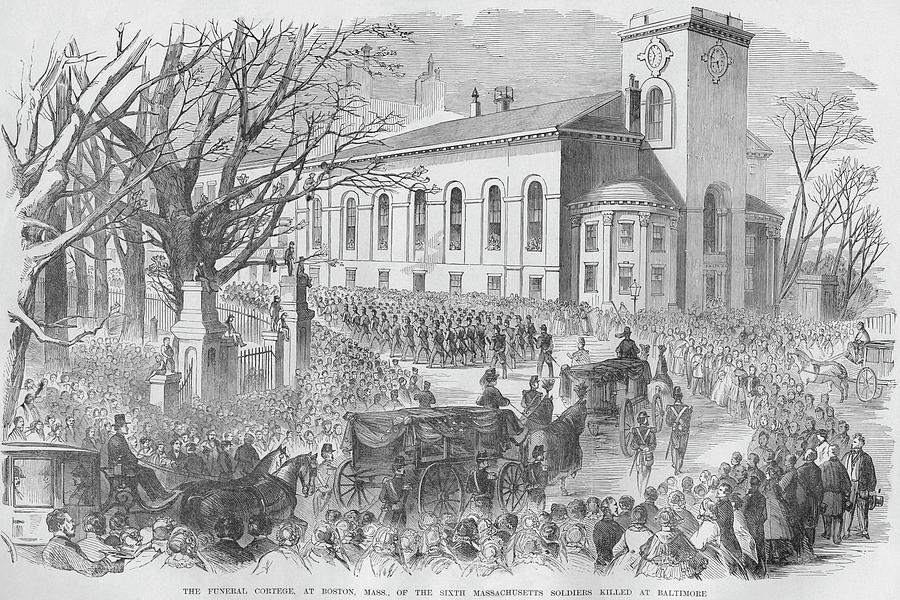
At least four soldiers died, among them seventeen-year-old Luther Ladd, often called the first Union soldier killed by hostile action, and Charles Taylor, a recruit no one in the regiment knew, whose family was never found. Somewhere between nine and twelve Baltimore civilians were killed; that count is the most disputed of all. That night, railroad bridges north of the city were burned and telegraph wires cut. Washington was cut off.
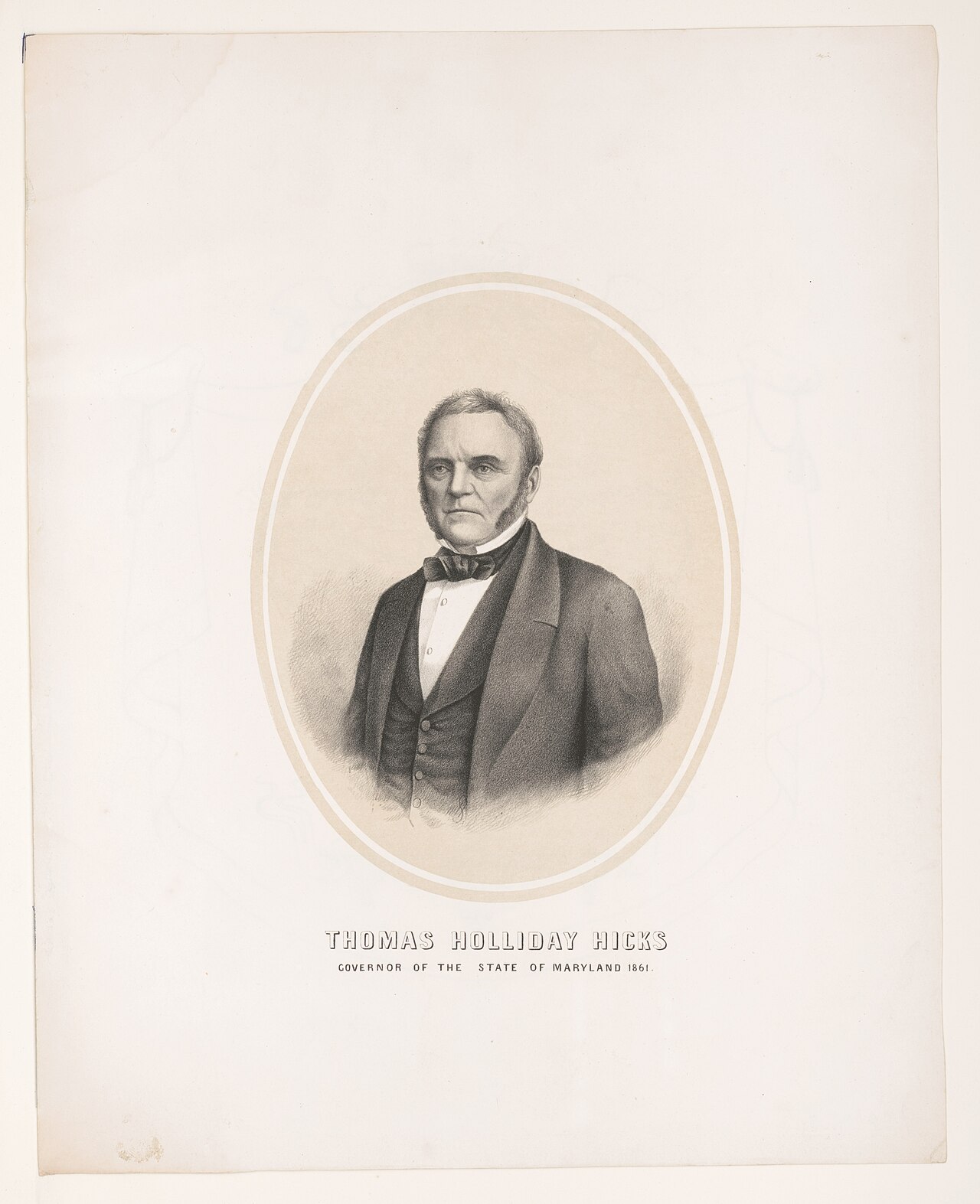
For days no troops came, and hardly any news. On April 24, John Hay heard Lincoln tell the volunteers, "I don't believe there is any North!" Help finally came the long way around, by water to Annapolis, and on April 25 the Seventh New York stepped off the train in Washington. The riot also gave Maryland a song: "Maryland, My Maryland," with its line about "the patriotic gore that flecked the streets of Baltimore," remained the state song until 2021.
Further reading
- The Coming Fury (Centennial History of the Civil War, Vol. 1), by Bruce Catton
- Baltimore and the Nineteenth of April, 1861: A Study of the War, by George William Brown
- Baltimore in the Civil War: The Pratt Street Riot and a City Occupied, by Harry A. Ezratty
As an Amazon Associate I earn from qualifying purchases.
Sources
- Benson J. Lossing, Pictorial History of the Civil War, Vol. 1 (1866)
- Official Records of the Union and Confederate Armies, Series I, Vol. 2
- John Hay's diary, April 1861
- National Park Service: "The Pratt Street Riot"; Lowell NHP, "Ladd and Whitney Monument"
- Maryland State Archives; Pottsville Miners' Journal; Charles Henry Fowler, Historical Romance of the American Negro (1902)